A book by Upenyu S. Majee

From a single classroom to shared humanity.

Trending EAST moves from the intimate scale of a classroom towards a wider question: what changes when we stop observing one another from a safe distance and begin to Engage differences, Ask questions, Seek restoration and Tend wounds?

StoryReflectionRelationshipParticipation
Where the book begins

A classroom is only the beginning.

A classroom is small enough for individual lives to matter and expansive enough that differences are inevitable. Trending EAST approaches this reality as a point of departure: memory is neither disregarded nor treated as nostalgia, but as a reason to ask and confront what our encounters require of us now. The questions then travel outward. What happens when another person’s story unsettles the assumptions that kept us apart? What does repair require after harm? And what does care look like when it continues after the immediacy of the moment has passed?
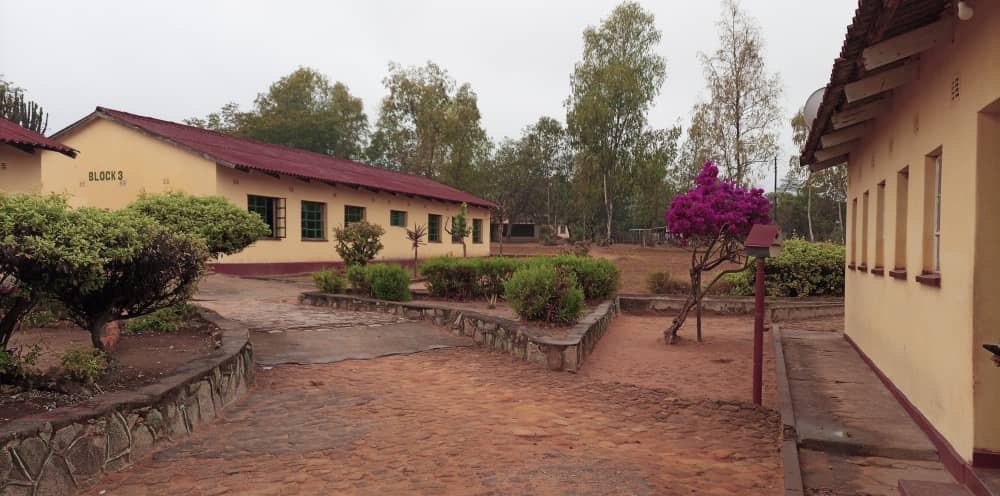
The journey is intentional and cumulative: encounter first, understanding next, and relationship over the long haul. Participation matters to the extent that it has meaning.
Walkway and classroom buildings in the educational setting connected to Trending EAST
A place where memory becomes responsibilityClassroom life · encounter · possibility
The subtitle is the method

Four movements. Being human and staying humane.

The subtitle is not a list of themes. It is a sequence of practices: a way of moving from distance toward encounter, from encounter toward proximity, and from proximity toward responsibility.

01 · ENGAGE

Engage Differences

Moving beyond reading external surfaces. Stepping toward unfamiliar people and different perspectives without first assigning labels or putting people into categories.

Proximity before judgement
02 · ASK

Ask Questions

Trading certainty for curiosity. Listening closely enough for another person’s story and their experiences to complicate what you thought you knew.

Inquiry before assumption
03 · RESTORE

Seek Restoration

Recognizing fracture without making it permanent. Asking what repair requires of us, whether we caused harm, suffered harm, or witnessed harm.

Repair instead of retreat
04 · TEND

Tend Wounds

Staying with what cannot be repaired quickly. Treating others with compassion because not all wounds are visible or self-inflicted.

Care instead of spectacle
From the book into practice

What changes when the EAST propositions translate to practice?

The four movements do not end at the final page. Around Trending EAST, a wider collective effort is taking shape, with an education endowment as one practical expression of it. The endowment is being designed to carry the book’s core ideas into a sustained posture for teaching and learning while holding on to an abiding commitment to human dignity, mutual responsibility, and collective flourishing.

Resource reality first

Promising only what can be sustained

The Trending EAST Scholarship Endowment design matches new intake to resources already pooled rather than hoped-for contributions. Existing educational commitments come first, before reach expands.

Listening before deciding

A learner is more than a set of numbers

The review approach looks beyond fees owed or marks achieved. It asks about circumstances, aspirations, anxieties and the wider context shaping a learner’s path before support decisions are made.

Education beyond schooling

Schooling matters, but it is not all there is to education

The concept deliberately leaves room for apprenticeships, local knowledge, vocational mastery, and other forms of teaching and learning rather than treating formal schooling as the only legitimate educational pathway.

How the book and endowment connect

A book can carry an idea. Its journey can help carry something further.

Trending EAST is connected to the education endowment through a developing stewardship model. The intention is to direct the substantial majority of author proceeds and pooled contributions towards the education endowment while also recognising the labour required to establish and run the initiative. The precise allocation has not yet been fixed, and the two sources may operate as separate streams. Payment arrangements are being prepared pending formal registration of the Trust; in the meantime, you can register a non-binding interest in obtaining the book, contributing to the endowment or both.

The endowment design asks two practical questions. Can support be offered without turning a learner into a pitiful object of need? Can a commitment be sustained without promising more than the fund can carry?
Actual resources firstNew intake is designed to follow funds already pooled, not projections or hoped-for giving.
A developing stewardship modelThe precise allocation has not yet been fixed. An earlier 95/5 model has been considered, but it should not be read as a settled commitment.
Continuity before growthExisting commitments are protected before new reach is added. Expansion follows capacity rather than the other way around.
See ways to take part
Stories within the story

Some stories need more room.

The main page keeps moving, but the deeper, resonant questions remain close at hand. Open a thread when you want to linger with it a little longer.

Thread 01 · memory

Why a classroom becomes more than a setting

The book leans on the closeness and immediacy of a classroom to ask a broader question: when fellow travelers have shaped how we see the world, what responsibility survives the moment in which we first met?

Thread 02 · proximity

What changes when distance makes room for proximity?

One story informing the project asks what happens when a person who had kept the suffering other at arm’s length suddenly finds strangers in immediate danger but within his reach. The resulting encounter is not about assigning victim and rescuer labels, but what proximity makes impossible to ignore.

Thread 03 · education

Why the endowment is designed around continuity

The proposed annual cycle starts with the resources actually available, sets intake levels accordingly and protects the educational commitments already made before taking on more.

In voice and memory

Listen before you read.

A short excerpt lets the book arrive first in the author’s voice. Noah is a member of the 2001 Form 4 East class who helped reconvene the class and invite Dr. Majee into the conversations that ultimately sparked the audio reflections behind Trending EAST. He also helps anchor the TESE Trust in the history of the class and its continuing connection with the wider community. Together, these recordings offer different ways into the book.

A reading from Trending EAST
Curated excerpt · 1 min 46 sec
Hear Noah’s Story for context, or continue with the longer reading from the book.

Ways to take part

Read it. Pass it on. Help possibility stay open.

The book remains the first entry point into the work. The current distribution model is being shaped around broad access, local printing and transparent support for the education endowment; direct contribution and continued conversation remain separate avenues for involvement.

01
Begin with the text

Get the book

The book is the first point of entry into the ideas. The developing stewardship model is intended to direct author proceeds towards the education endowment while also recognising the labour required to establish and run the initiative.

02
Help it travel

Gift or gather around copies

The physical distribution model is being designed around collective orders and regional printing so books travel through communities without incurring unnecessary shipping logistics and costs.

03
Offer practical support

Support the education endowment

You can register an interest in contributing to the education endowment and, if you wish, indicate an amount. The team can then contact you when payment arrangements are ready. This is not a payment or a binding promise.

04
Keep the circle open

Join the conversation

Bring questions, reflections, wonderings, and concerns. Carry the four movements into your own setting and learn with and alongside others.

Continue in community
Payment arrangements are being prepared pending formal registration of the Trust. In the meantime, the interest form is for book enquiries and possible contributions only. No payment is taken, no order is placed and no binding pledge is created.
After the final page

Continue it in community.

A book about relational encounters will not come to a close at the last sentence. The community space is for people reading alongside one another, bringing questions, reflections, wonderings, and practical ideas into a shared circle.

TE

Trending EAST · Community

The aim is not agreement on demand. It is the harder practice of remaining present to one another even when it is not convenient.

Conversation prompts
What changed when you stayed with a difficult question?Reflection · four movements
Where does restoration require more than agreement?Discussion · practice
What might tending a wound look like in your own setting?Community · practical ideas
Trending EAST.
© 2026 Upenyu S. Majee · A book, a conversation, a continuing practice.
Story · memory

The story returned before the book began.

Two decades after the 2001 Form 4 East class had dispersed, members of that circle found one another again. What followed was not a curated plan for a publication. It began with conversation, memory and a request to reflect on experiences that had continued to matter long after the school year ended.

That is why this page begins with the story before it asks the visitor to take any further action. The book first invites the reader to connect and sit with questions that have been unfolding for years.

Story · Proximity

Distance is easy until another life is within reach.

One story informing the project follows a person who had habitually switched off reports of people in danger and in need. He was not openly hostile. He simply kept the crisis outside the boundaries of his own personal life.

That distance collapsed during an emergency at sea. Suddenly there were people in the water within reach of his small boat. The experience did not end when some of the people were pulled to safety. What lingered was the need to know who they were, what had happened to their families and what responsibility remained after the immediate crisis was over.

The important shift is from looking at people as a problem and as victims to encountering them as people whose lives make a claim on our attention. For Trending EAST, that is one way of understanding mutuality. Help does not have to place one person above another. Relational encounters transform everyone involved.

Design · Continuity

Do not promise what the fund cannot sustain.

The endowment design begins with a practical discipline. Before a new application window opens, the resources available for support are intended to be assessed against resources actually pooled. Intake follows that reality rather than a hoped-for fundraising figure. Once support has begun, continuity comes before expansion. Existing commitments are protected before new additions. Ongoing reviews are intended to listen for changes in a learner’s circumstances and wellbeing rather than operate as punitive academic audits.

This is one place where the language of tending wounds finds its operational expression. Care is not only the decision to begin. It includes remaining present for the part of the journey already undertaken.

Design · attentive listening

Need should not flatten a person’s story.

The proposed application process is designed to resist turning a learner into a financial statistic. Material need matters, but it is only one, smaller part of the picture. The fuller review asks what is happening around the learner: family circumstances, academic pressures, interests, ambitions and the practical obstacles that could impede progress. The intention is to understand enough of the person and their context to make informed decisions rather than assume that one number explains everything.

Story · education

Why education sits beside the book.

The wider concept does not treat formal schooling as the only or whole meaning of education. It acknowledges and elevates the value of apprenticeships, vocational mastery, local knowledge and other ways in which people learn to make a life and contribute meaningfully to society.

That is why education appears beside a book concerned with relational encounters, restoration and care. It is one practical place where those questions can be tested.

The book · access

Reading comes before fundraising.

Trending EAST is being offered as more than a conventional retail product. The developing stewardship model is intended to direct author proceeds towards the education endowment while also recognising the labour required to establish and run the initiative, but the book still has to stand on its own as something worth reading, questioning and discussing.

The electronic edition is being designed as an open offering. Someone without the means to contribute should still be able to read the text. Those who can offer more for the book and contribute more to the education endowment may choose to do so, allowing access and reciprocity to coexist without turning price into a barrier.

The first invitation is to read. Contributions to the education endowment are one possible response, not the condition for belonging.

Register interest in the book ↗
The book · distribution

A globally-resonant book does not need one global warehouse.

The physical distribution idea is deliberately local. Rather than sending every copy from one location across oceans and borders, the model being developed favors regional print-on-demand for collective orders.

For trusted institutions and community partners, a governed local-printing option can be explored. The practical aim is to reduce unnecessary shipping costs and delays while allowing more of the printing expenditure to remain with local businesses.

Distribution can itself reflect the book’s argument: working with the places and relationships already there rather than assuming everything must flow from a distant centre.

The final production logistics still need to be determined in consultation with local community contacts, but this is the direction being designed for physical copies.

The fund · stewardship

The work behind the work also has to be treated fairly.

The stewardship model is still being developed. The intention is to direct the substantial majority of author proceeds and pooled contributions towards the education endowment, while also recognising the labour required to establish and run the initiative. The two sources may operate as separate streams, and the precise allocation has not yet been fixed.

An earlier 95/5 allocation has been considered as part of that work, but it should not be read as a settled commitment. There is no fixed monetary ceiling being presented as current policy. Consistent with the spirit of Ubuntu, the book and the TESE initiative, the Trustees will consult with the people involved before final arrangements are settled.

That consultation matters because websites, secure payment systems, administration, coordination and maintenance all require human labour. Treating that work fairly is part of the same ethics that asks how resources reach learners. Transparency means being open about both.

Register an interest in contributing ↗
In conversation

Some pages are better entered by voice.

The four movements in Trending EAST are not instructions delivered from a podium. They invite exchange among fellow travelers: how we read difference, what we assume before asking, what repair asks of us, and what it means to remain present after the dramatic moment of harm has passed.

Share to...